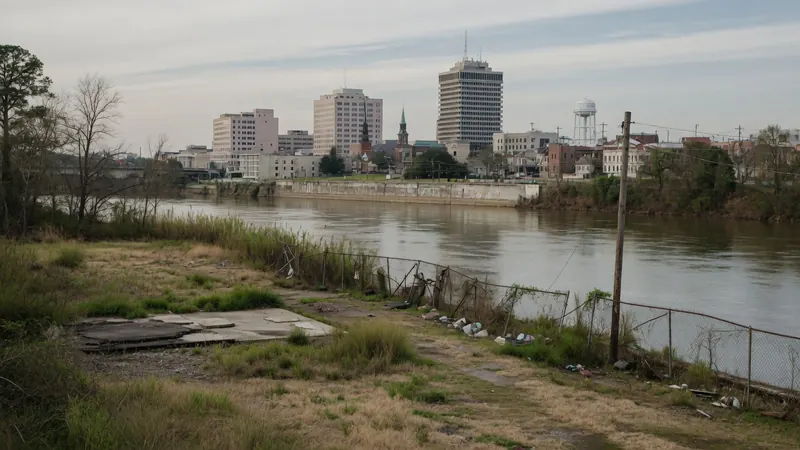
The Jackson City Council recently tabled a measure that would have designated about 93 acres beside the Pearl River as surplus and given LeFleur Development LLC an option to buy it for a planned resort and casino with an estimated cost of almost $1 billion, WLBT reported. City Attorney Drew Martin said the option could be renegotiated, and related legislation is expected to be re-filed. The proposal remains far from final because state law currently bars a casino in Jackson, but supporters say it could bring substantial tax revenue and jobs.
Land option tabled and open to negotiation
On October 6, the council tabled the request. The next day, Martin said he would meet with council members and possibly renegotiate the option. As of the most recent coverage, no new vote date had been reported. Under the draft option, LeFleur would pay $1,000 for a one-year option through October 31, 2027, and could extend it to October 31, 2031 at $2,000 per year. Martin noted the city could cancel the option before closing, and reverter clauses would return the land if development does not proceed. He described the arrangement as "still a speculative deal" while saying the contract remains open to changes, according to PlayUSA.
Proposed sale price and council skepticism
Mayor John Horhn requested the option, which would allow LeFleur to buy the land for about $111,000, the average of two March appraisals at $112,000 and $110,000. Horhn said a casino is only one possibility and no final decision has been made; any sale would likely hinge on state approval for a casino. Ward 1 Councilman Ashby Foote worried the city could "look pretty foolish" if the land later became worth 10 to 20 times more after a casino approval. Ward 2 Councilwoman Tina Clay said the city should wait. Martin countered that the council should consider the revenue a resort could bring. LeFleur member William Richardson claimed the project could generate up to $24 million a year in new sales and property taxes and create 2,600 direct jobs, though WLBT noted those figures were unverified.
What the proposed development would include
A study of proposed legislation shows impacts beyond the casino itself. The bill is expected to be re-filed with similar language and would require a minimum capital investment of $500 million, a $10 million development fee when licensed, and $10 million annual payments for 10 years to help brick-and-mortar businesses. House Ways and Means Chairman Trey Lamar said the proposal differs because it would be almost entirely private sector investment, with developers seeking relaxed regulations rather than state assistance. Rep. Grace Butler-Washington said the retail portion broadened the scope beyond just a casino.
Gaming tax earmarks and Vicksburg offset
For the first five years of operation, the bills earmark gaming tax revenues for several purposes: Jackson State University would receive $7 million annually for five years for a new stadium; UMMC Cancer Center & Research Institute would receive $5 million annually for five years for operational support and maintenance; $2 million annually for five years would go to a tram system connecting the airport, downtown and UMMC; $2 million annually for five years would support repairs and improvements at the Mississippi Children's Museum; and $1 million annually for three years would extend Lakeland Drive. Butler-Washington said being specific "shows transparency" and allows accountability. The legislation would also reimburse Vicksburg/Warren County casinos for any decline in local gaming revenue below their three-year historical average before a Jackson casino opens.
State law and flood-control questions
State law permits casinos only in three Gulf Coast counties and counties along the Mississippi River. From 2010 through 2026, at least one bill to allow Jackson gaming was introduced each year, but none advanced out of committee. Rep. Chris Bell's 2026 bill drew a warning that delaying could cost a half-billion-dollar investment and that a future bill would likely face Senate resistance. Martin said proposed legislation would authorize one Jackson gaming license and include a five-year guarantee to offset losses for Vicksburg and Warren County casinos. Ward 3 Councilman Kenneth Stokes cited the failed Xanadu proposal from the mid-1990s as evidence lawmakers may not approve. Separately, the land lies between Fortification Street and the J.H. Fewell Water Treatment Plant, includes Belhaven Beach, and is within the footprint of two flood-control alternatives. Keith Turner of the Rankin-Hinds Pearl River Flood and Drainage Control District said the casino proposal is not connected to that work: "We're not associated in any way."